Choose timezone
Your profile timezone:
The Geneva Cosmology Group is delighted to welcome you to the 2026 Swiss Cosmology Days
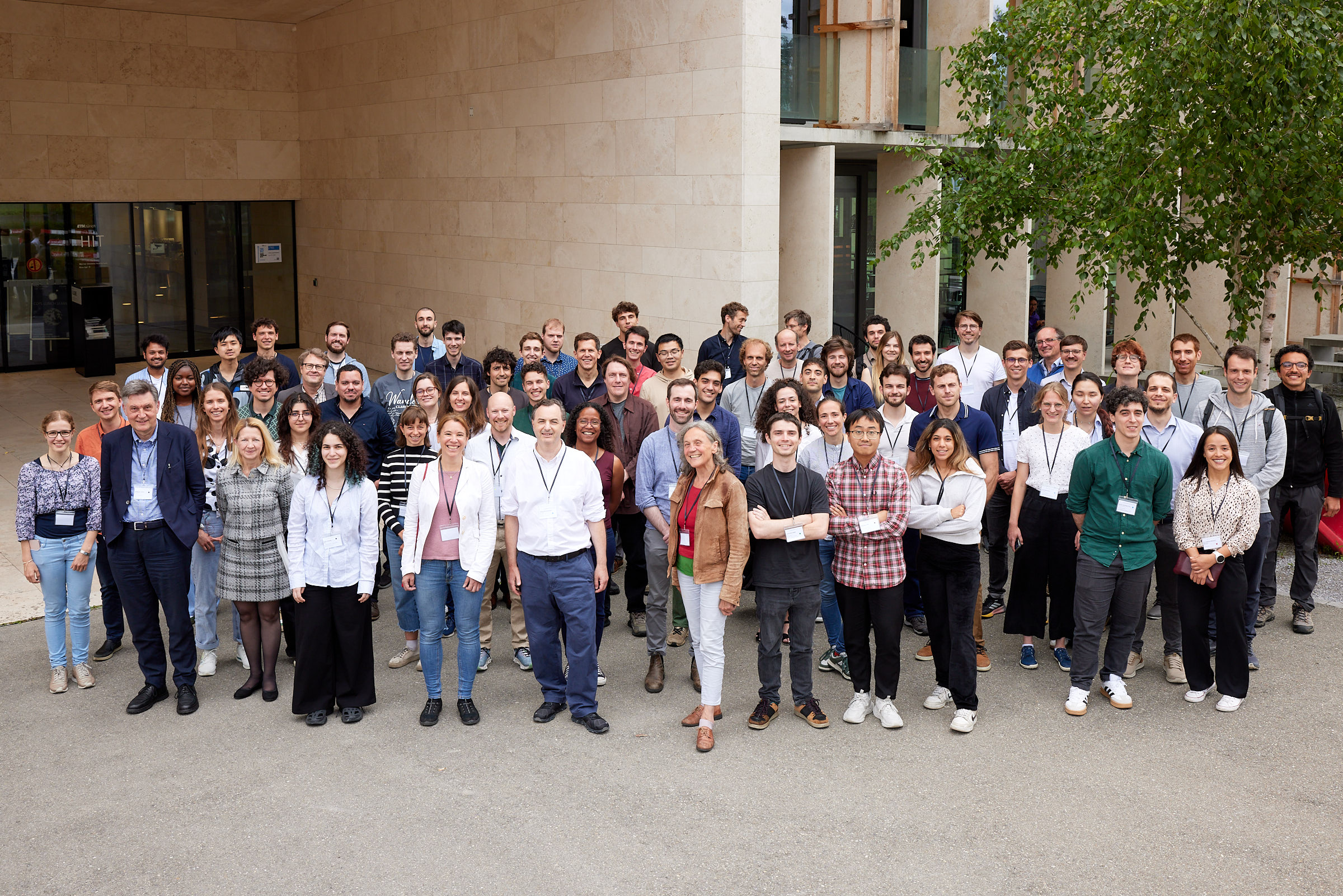
The Swiss Cosmology Days are yearly meetings aimed at promoting communication and exchanges amongst cosmologists working in Switzerland. They offer a national platform for scientists to present their research, lead exciting discussions and enable closer collaborations and networking. Young scientists are particularly encouraged to participate. The first meeting took place in February 2013 at the University of Bern, and further editions took place at ETH Zurich, University of Geneva, EPFL, University of Basel, and at CERN. The 2026 edition will be hosted by the Cosmology Group at the University of Geneva.
Participants have to make their own arrangements for their accommodation. Here is a list of hotels close to the department:
Home Swiss Hotel, av. Ste Clotilde 7
Starling Hotel, rte des Acacias 4
Primadom Hotel, rue Dancet 5
Comédie, rue de Carouge 12
We present cosmological constraints from the full six-year Dark Energy Survey (DES) combining weak gravitational lensing and galaxy clustering in a joint 3 $\times$ 2pt analysis over $\sim$5000 sq. deg. This represents the legacy large-scale structure result of DES, culminating more than a decade of survey operations and analysis development. We derive constraints on $\Lambda$CDM and several extensions. The $\Lambda$CDM analysis yields $S_8 = 0.789 \pm 0.012$ and $\Omega_m = {0.333}^{+0.023}_{-0.028}$, and we discuss the consistency of these results with CMB primary anisotropy constraints. We also present the first combination of all four DES dark-energy probes: 3 $\times$ 2pt, SNe Ia, BAO, and clusters. Beyond the cosmological results, we reflect on key lessons from this final DES analysis and discuss what these imply for the coming generation of cosmic surveys.
A direct, model-independent probe of the validity of theories beyond General Relativity and the concordance LCDM model is provided by the Weyl potential, the sum of the temporal and spatial distortions of the spacetime geometry. Its measurement, obtained by combining galaxy clustering and galaxy-galaxy lensing data from the Dark Energy Survey (DES-Y3), is in tension with the LCDM prediction at low redshift. Recently, the novel baryon acoustic oscillation measurements from DESI, combined with luminosity distance measurements from type Ia supernovae and Cosmic Microwave Background measurements from Planck, indicated a preference for an evolving dark energy model with an equation of state crossing w=-1. In this talk, I will discuss how the background evolution in evolving dark energy models impacts the growth of the Weyl potential. I will show that evolving dark energy models that cross the phantom divide can naturally reduce the Weyl potential at intermediate redshift, providing a better agreement with DES measurements. These models, however, do not fully capture the measured redshift evolution of the Weyl potential. Further data from Euclid and LSST are then necessary to determine if an evolving dark energy background is enough to explain the low values of the Weyl potential at intermediate redshift, or if the evolution of the perturbations itself should be modified by changing the theory of gravity or by including additional interactions in the dark matter sector.
In the context of soon to be released data from large-scale structure (LSS) Stage IV surveys that offer extremely precise and broad measurements, I will present $\texttt{SwiftC}_\ell$: a fast, accurate and differentiable Python pipeline for the beyond Limber computation of the angular power spectrum. $\texttt{SwiftC}_\ell$ includes all relevant contributions to wide-angle surveys that are computed exactly up to arbitrary precision. We compare our pipeline to the N5K challenge, a challenge aimed at finding a suitable pipeline for the data analysis of the Rubin Observatory Legacy Survey of Space and Time (LSST). In this frame of reference, $\texttt{SwiftC}_\ell$ performs the computation of the 120 different angular power spectra over 103 angular separation bins in 2 ms on one GPU core. About 100x faster than the previous best code, $\texttt{SwiftC}_\ell$ delivers the accuracy and speed required in near-future data analyses. Furthermore, all $\texttt{SwiftC}_\ell$'s outputs are auto-differentiable, facilitating gradient-based sampling that will be crucial in the near future.
Precision cosmology increasingly relies on repeated evaluations of computationally expensive observables, such as Cosmic Microwave Background (CMB) anisotropy spectra and large-scale structure statistics, posing a significant bottleneck for parameter inference and model comparison. Emulation techniques have emerged as a powerful solution, enabling fast and accurate interpolation of these observables across parameter space. I will begin by reviewing recent progress in observable emulation, highlighting their performance, limitations, and impact on modern cosmological analyses.
I will then present CLiENT (Cosmological Likelihood Emulator using Neural Networks with TensorFlow), a method that bypasses observable prediction entirely by directly emulating the likelihood function of a dataset given cosmological parameters. This approach provides a flexible and fully differentiable surrogate for the likelihood, enabling efficient gradient-based inference methods.
Using fewer than $\sim 2\times10^4$ training evaluations, the likelihood emulator achieves high fidelity, recovering posterior constraints to within $0.1\sigma$ of the true likelihood and maintaining pointwise accuracy at the level of $\Delta\chi^2\leq 0.5$ across relevant regions of parameter space. I will demonstrate the robustness and versatility of this approach, including applications to extended cosmological models.
These results position likelihood emulation as a powerful and complementary alternative to traditional observable-based approaches, with clear advantages for fast, flexible, and differentiable cosmological inference.
Two-point correlation functions are a standard tool in cosmology. However, their estimators have intrinsically non-Gaussian likelihoods, even for perfectly Gaussian random fields.
We present a framework for computing exact correlation-function likelihoods for the spin-2 fields of cosmic shear. These likelihood distributions show significant skewness and can systematically shift parameter inferences. We provide exact solutions for the one-dimensional marginals and introduce a Gaussian copula model that efficiently captures the dependencies in high-dimensional correlation-function data and which can straightforwardly be used in Bayesian analyses. Copula-based approaches open a path to flexible, accurate likelihood modeling not only for weak lensing but for a wider range of cosmological probes. More generally, our results illustrate how both correlation structure and likelihood shape impact posterior constraints, highlighting the need for careful modeling of non-Gaussian likelihoods.
We present a non-parametric, model-independent reconstruction of the cosmological background and perturbation dynamics in non-minimally coupled theories of gravity. Within the Effective Field Theory (EFT) of dark energy framework, we reconstruct the time-dependent cosmological constant, $\Lambda(t)$, and the non-minimal coupling function, $\Omega(t)$, from cosmological data.
To ensure stability, we apply a correlated smoothing prior that restricts the reconstruction to the space of sufficiently smooth functions.
Using CMB, DESI BAO, Type Ia supernovae, CMB–ISW lensing cross-correlations, and large-scale 3×2pt DES Year 3 data, we find a $2.8\sigma$ hint for a non-minimal coupling. For the dark energy equation of state, our results indicate a preference for the existence of crossing of the phantom divide, $w_{\rm DE}=-1$, at $z<0.8$. The non-minimal coupling effect stabilizes dark energy perturbations, providing a viable physical interpretation of the phantom crossing scenario. Our work paves the way for model-agnostic searches for signatures of modified gravity in cosmological data.
Stage-IV galaxy surveys will soon deliver data of unprecedented depth and volume. Extracting the maximum information from these data while keeping systematics under control poses new challenges for the field. In this talk, I will present GalSBI, an open-source framework that addresses both simultaneously by constructing highly realistic synthetic galaxy catalogs through simulation-based inference.
GalSBI combines parametric luminosity functions, morphologies, and SEDs with SHAM-OT — a novel subhalo abundance matching scheme based on optimal transport — to jointly model the photometric and spatial properties of observed galaxy populations. Model parameters are inferred by comparing realistic forward-modelled image simulations directly to HSC and DES data. The constrained framework simultaneously reproduces observed magnitudes, colors, sizes, redshift distributions, and clustering statistics with high fidelity.
Because GalSBI operates at the pixel level, selection effects and calibration systematics propagate naturally into any downstream data product, making it applicable to a wide range of analyses, such as photometric redshift estimation, blending and shape measurement calibration, or augmenting N-body simulations with realistic galaxy populations within simulation-based inference pipelines.
DESI DR2 delivers over 30 million redshifts from the first three years of the main survey, enabling high-precision large-scale structure measurements. In this talk, I will present an assessment of spectroscopic systematics in DR2, with a focus on redshift uncertainties and catastrophic redshift errors. Using repeated observations of BGS, LRG, ELG, and QSO targets, we empirically characterize redshift-error distributions and build models for their impact on clustering and cosmological inference.
Tessellation methods are extensively employed in the analyses of cosmic large-scale structure (LSS). However, these techniques are highly sensitive to perturbations in both densities and positions of points, often leading to substantial rearrangements of tessellation configurations. As a result, considerable additional statistical errors are introduced in various tessellation-based statistics, thereby weakening their cosmological constraints. In this work, for the first time, we identify this issue and propose an efficacious measurement scheme through subsampling and averaging to enhance the stabilities of tessellation-based statistics. As a case study, we apply the new scheme to measure multiple primary void statistics [i.e., void size function (VSF), void two-point correlation function (VTCF), and void power spectrum (VPS)] in two distinct classes of voids, based on Delaunay and Voronoi tessellations, respectively. We notice that the statistical uncertainties in void statistics can be predominantly attributed to tessellation instabilities. Through rigorous testing, we demonstrate that the proposed method can substantially eliminate these scatters to deeply mine the statistical power of void statistics. Specifically, we find that our method can dramatically boost the signal-to-noise ratios (SNRs) of void Baryon Acoustic Oscillations (BAOs) and significantly improve the constraining power of void statistics on cosmological parameters. These findings showcase enormous application potentials of our new method in maximizing extraction of cosmological information from galaxy surveys. Importantly, our method is simple yet highly potent with broad applicability, hopefully evolving into a standard framework for measuring tessellation-based statistics in the future.
The Hydrogen Intensity and Real-time Analysis eXperiment (HIRAX) is a radio interferometer currently being deployed in the Karoo Desert, South Africa. It aims to constrain the dark energy equation-of-state parameter using accurate measurements of baryon acoustic oscillations (BAO) via 21cm intensity mapping. It will be equipped with 1024 dishes, each 6m in diameter, arranged in a regular, compact grid, operating in the 400-800 MHz frequency range corresponding to redshifts 0.75 < z < 2.5. Like all radio arrays, HIRAX also suffers from instrumental systematics, among which the spatial and spectral shapes of the primary beam are worrisome, and understanding and characterizing them is critical for precision cosmology. This talk will introduce the effects of the primary beam and discuss the recent work on measuring the HIRAX prototype beam using solar transit observations. These data provide a direct probe of the instrumental response across frequency and offer a complementary perspective to beam models derived from EM simulations. This talk will include discussions on observations, analysis, key features observed in the prototype data, and how this informs ongoing beam modeling efforts for HIRAX.
Spatial curvature is a fundamental cosmological parameter that is routinely constrained with cosmological observations. Even a small non-zero value would have huge implications if detected. Large-volume galaxy surveys can provide constraints independent of the CMB, reducing the dependence on model assumptions, but only if we have forward models that can treat spatial curvature consistently. I will present a novel approach for N-body simulations of structure formation that model the geometry of spacetime accurately, allowing the generation of halo catalogues for the large survey footprints that are required for constructing clean geometric probes of the curvature parameter.
Dark matter accounts for 85% of all matter in the Universe, yet its nature remains elusive. Next-generation telescopes are providing a wealth of observations of dark matter-dominated galaxy clusters, which contain subtle clues to its nature. However, traditional methods either compress the data into summary statistics or require computationally expensive forward modelling. We present a machine learning framework, designed to provide robust and interpretable constraints on dark matter self-interactions from observations informed by simulations. Our method is trained on multiple simulation suites alongside weak gravitational lensing observations from Euclid and the Hubble Space Telescope. It learns to align shared physical features and marginalise over the differences found in simulations. In addition, we use confidence metrics of the learned features to determine whether the model successfully learned the physical relationships or if simulation-observation mismatch would still lead to unreliable constraints. Finally, we will present preliminary results on the nature of dark matter from the first application of this methodology to a large sample of observed galaxy clusters.
Time-delay cosmography with lensed quasars is a one-step method for estimating the Hubble constant in the local Universe independently of the cosmic distance ladder. It does not require any intermediate calibration and relies on measuring the time delays between multiple images of strongly lensed quasars, which are inversely proportional to the Hubble constant.
In this talk, I will present the cosmological constraints from the latest blinded analysis conducted by the TDCOSMO collaboration from eight strongly lensed quasars (hereafter, the TDCOSMO-2025 sample). Building on recent advances, we have improved our modelling of (1) line-of-sight effects, the surface brightness profiles of lens galaxies, (3) the stellar orbital anisotropy, and we also corrected for projection effects in the lens dynamics. Our uncertainties in the deflectors' mass density profiles remain maximally conservative as they incorporate explicitly the effect of the mass-sheet degeneracy, now constrained by new measurements of stellar velocity dispersions from spectra obtained with the James Webb Space Telescope (JWST), the Keck Telescopes, and the Very Large Telescope (VLT), all benefitting from crucial methodology improvements. Our primary result, $H_0 = 71.6^{+3.9}_{-3.3}$ km/s/Mpc, is derived from the TDCOSMO-2025 sample combined with $\Omega_m$ constraints from the Pantheon+ Type Ia supernova (SN) dataset. I will end the talk by mentioning the various further improvements included in our upcoming 2026 milestone results.
Measurements of the kinematic cosmic dipole continue to show an intriguing tension between the value inferred from the CMB and that obtained from high-redshift source number counts. While the measured dipole direction appears consistent, the amplitude, set by the observer’s peculiar velocity v_o, remains in significant disagreement. Here, we propose using strong gravitational lenses with well-measured Einstein radii to estimate the kinematic cosmic dipole, through the relativistic aberration of the Einstein angle induced by the observer’s motion. We show that this effect could be detected solely from measurements of the Einstein radius in wide, high-resolution imaging surveys such as Euclid. However, the precision achievable using Einstein-radius measurements alone, without redshift or lens-galaxy mass information, appears insufficient to discriminate between the CMB value of v_o and that derived from source number counts at high statistical significance. Nevertheless, we demonstrate that including a large sample of lenses with available kinematic information, either via the Fundamental Plane relation or, ideally, through spectroscopic velocity-dispersion measurements, drastically reduces the noise and substantially improves the constraining power of this method. We show that, for a realistic sample of strong lenses detected by Euclid and complemented with spectroscopic velocity dispersion measurements from 4MOST or DESI, it is possible to discriminate between the CMB- and source-number-counts-inferred values at the ∼ 5σ level using a new, fully independent method. We further demonstrate that this technique is only weakly sensitive to strong-lensing selection effects, with selection biases and threshold effects estimated to be well below the 1% level.
Peculiar velocities have emerged as essential tools in modern cosmology and astrophysics. A particularly compelling application lies in the use of Type Ia Supernovae (SNIa) luminosity distances to map the underlying large-scale matter structure. In this talk, I will show that the observed luminosity-distance multipoles effectively encode the expansion and shear of the local velocity field, allowing for the reconstruction of the ellipsoidal kinematics of the Laniakea supercluster.
In this talk I am going to focus on the study of the power spectrum of the velocity field induced in the primordial plasma by expanding scalar-field bubbles during a first-order phase transition occurring in the radiation-dominated era.
Contrary to previous expectations, we find that the breaks in the velocity spectrum are not associated to the bubble size and the sound shell thickness,
but to the position of the discontinuities of the velocity profiles.
This distinction is particularly relevant for supersonic deflagrations,
as it implies that the intermediate slope is more pronounced and
the two breaks are more separated when the wall velocity approaches the Chapman-Jouget speed, instead of the sound speed.
Moreover, we find that the asymptotic branches of the velocity power
spectrum are determined by an integral over the velocity profiles at large scales, and by the discontinuities of the profiles at small scales. Furthermore, the position of the two breaks and the intermediate slope depend on the distribution function of the times of bubble nucleation.
The main result is a refined template for the velocity
spectrum at the beginning of the sound-wave phase,
which can be used for studying the resulting anisotropic stresses
and gravitational wave production.
I will discuss the construction of an effective field theory for a compact body coupled to gravity, whose key feature is that the dynamics of gravitational perturbations is explicitly determined by known solutions in black hole perturbation theory in four dimensions. In this way the physics of gravitational perturbations in curved space is already encoded in the effective field theory. I will explain how to model a compact body (in particular a black hole) as a spherical shell, whose finite size regulates short-distance divergences in four dimensions and whose tidal responses are described by higher-dimensional operators.
The number of gravitational wave (GW) events observed is rapidly growing, and will soon reach statistical significance with the next generation of detectors. Astrophysically sourced GW are expected to be a new complementary and totally independent tracer of large-scale structure. Consequently, cross-correlation techniques offer the opportunity to fully exploit the potential of this new channel for cosmological parameter inference by connecting it to other observables. We are developing a flexible framework based on the angular power spectrum, which can correlate different observables and will help us evaluate the impact of GW observations on parameter constraints. In a recent work, we applied this method to the correlation between GW and photometric galaxy clustering data, showcasing the strength of this technique for precisely determining the Hubble parameter, to better than 1%.
Gravitational wave (GW) standard sirens enable independent measurements of the Hubble constant. In the absence of electromagnetic counterparts, the "dark siren" method statistically correlates GW events with potential host galaxies. We present a measurement of H0 using 142 events from the GWTC-4.0 GW event catalog and the DES Y6 Gold photometric galaxy catalog. We jointly infer cosmological and GW population parameters. We analyze the impact of galaxy catalog properties on the inference, identifying significant features in the galaxy redshift distribution which can introduce biases. This study demonstrates the adaptation of deep galaxy catalogs for GW cosmology, highlighting key challenges and methodologies essential for maximizing the potential of next-generation galaxy surveys.
We investigate the detectability of the stochastic gravitational wave background (SGWB) anisotropies by cross-correlating them with a galaxy distribution. We develop two independent and complementary approaches: galaxy-informed simulations of SGWB maps and a physically motivated analytical modelling. We implement an empirically driven method to map SGWB anisotropies by simulating compact binary mergers according to population constraints from recent LIGO–Virgo–KAGRA (LVK) observations and assigning them to host galaxies drawn from the Euclid Flagship catalogue. Consequently, we forecast that in a shot-noise limit scenario, for 10 years of observation, we can obtain a clearly detectable multi-messenger cross-correlation for any likely merger rate at a minimal angular resolution of $\ell = 28$. Moreover, for a resolution of $\ell = 44$, a signal an be detected in 1, 3 and 4.4 years of observation respectively for the LVK O4a upper, median and lower merger rate estimates. We further show that for high merger rates, the signal is maximised in a redshift range of $1.3< z < 2.5$ and that a tomographic binning of the multi-messenger cross-correlation enables to constrain the evolution of compact binary mergers. These results provide forecasts for the detectability of SGWB anisotropies and highlight the potential of multi-messenger cross-correlations to probe the large-scale structures of the Universe.
Thanks to exquisite CMB B-mode data, we should see within the next few years massive improvements in constraints on a background of gravitational waves from inflation. In particular, SPT-3G and BICEP (SPO) have collected now enough data to achieve, in principle, 3 times better constraints on the tensor-to-scalar ratio than currently published, after the delicate removal of their main contaminant, the gravitational lensing signal. I'll discuss the CMB B-mode observational program, and work on these extremely deep maps towards this objective.
Scalar Induced Gravitational Waves (SIGW) are generated at second order in perturbation theory and to achieve observational relevance, inflationary dynamics must evade the standard slow-roll scenario at small scales, generating large curvature perturbations following strongly non-gaussian statistics. We propose a method to efficiently compute the SIGW spectrum including arbitrary non-gaussianities. First, we solve the wave equation adopting semi-analytic methods; this result into an expression involving integrals in Fourier space impossible to solve directly on a lattice, a bottleneck that we overcome by recasting these integrals
as a sum of $N_\alpha \sim 50$ convolutions, each of which can be computed efficiently with FFT methods. Finally, the power spectrum is measured directly from the lattice realization. We implement this in FLAN-SIGW, a GPU-accelerated code able to compute fully non-perturbative, non-Gaussian SIGW spectra in seconds with an error within $\sim 10\%$ with modest computational resources. In this first implementation, in order to assess the performance of the method, we adopt a standard radiation-dominated background with $w = 1/3$.
Atom interferometer experiments offer interesting prospects for searches for interactions of ultralight bosonic dark matter with Standard Model particles, detection of gravitational waves in a frequency band inaccessible to experiments that are operating or under construction, as well as tests of dark energy and modified gravity. The 140-m PX46 access shaft to the LHC at CERN and an 870-m shaft providing access to the Gotthard Base Tunnel in Sedrun, Grisons (aka “Porta Alpina”) offer ideal locations for next-generation vertical long-baseline atom interferometers. I will discuss the results of an exploratory environmental measurement campaign at the Sedrun site as well as status and outlook towards constructing a Gotthard Atom Interferometer.
The second data release of the European Pulsar Timing Array (EPTA) collaboration provides evidence for the presence of a gravitational-wave (GW) background. In this work, we explore a potential cosmological interpretation of this signal in terms of inflationary scenarios.
We parametrize the tensor power spectrum in terms of the tensor-to-scalar ratio $r$, the tensor spectral index $n_t$, the reheating temperature $T_{\rm rh}$ and the cut-off frequency $f_{\rm end}$.
We incorporate all relevant observational constraints, including those from Cosmic Microwave Background, Big Bang Nucleosynthesis and LIGO–Virgo–KAGRA observations.
We demonstrate that imposing these constraints consistently reduces the region of parameter space that provides a viable interpretation of the EPTA signal, to $-11.66 \lesssim \log_{10}r \lesssim -1.45$, $1.32 \lesssim n_t \lesssim 2.47$, $1.78 \,{\rm MeV} \lesssim T_{\rm rh} \lesssim 28.2 \,{\rm GeV}$ and $75.86\,{\rm nHz} \lesssim f_{\rm end} \lesssim 14.45\, {\rm Hz}$ at $95\%$ confidence level.
This favours the scenario in which the GW spectrum in the EPTA frequency band originates from tensor modes that re-entered the Hubble radius during the radiation-dominated era, allowing for a higher $r$ and a flatter spectrum.
However, $T_{\rm rh}$ must take very low values, which are challenging to explain theoretically.
Using the most recent available cosmological datasets the Hubble tension has climbed to beyond 7 sigma significance. Different families of measurements point towards two hardening camps, and in this talk I review the efforts of the H0DN collaboration on testing the consistency of local measurements, outlining the lessons learned from this systematic audit. With the tension increasingly appearing insurmountable to reconcile, I discuss what models beyond LambdaCDM still offer any hope at resolving the puzzle and how they work in detail and the prospects we have for further disambiguating between them.
Baryonic feedback processes play a central role in the evolution of galaxy formation and in the interpretation of cosmological constraints from galaxy surveys. The thermal Sunyaev-Zel’dovich (tSZ) effect traces this feedback by probing hot gas content over a broad redshift range. We cross-correlate Atacama Cosmology Telescope DR6 tSZ y-map and the Dark Energy Survey Year 6 galaxy positions to constrain halo bias-weighted mean electron pressure in six tomographic redshift bins up to $z \sim 1.1$. We assess the impact of cosmic infrared background (CIB) contamination by comparing angular power spectra from different deprojected y-maps. Furthermore, we define suitable scale cuts to complement a halo occupation distribution modeling framework. We compare our constraints with existing literature and check the compatibility with latest results pointing towards a higher baryonic feedback.
Large upcoming cosmic shear experiments like Euclid and LSST are attempting to retrieve cosmological information by constraining the matter power spectrum in the local Universe and its redshift evolution. This approach requires that the shape and evolution of the power spectrum can be accurately predicted from cosmological parameters. In recent years, it has become clear that baryonic processes, namely ejection of gas from dark matter halos through energy injection by supermassive black holes (SMBH), modify the distribution of matter on scales as large as several Mpc compared to the dark-matter-only case. Cosmological simulations are unable to predict this effect from first principles, which represents a major source of systematic uncertainty for cosmic shear experiments. In this talk, I will present our ongoing efforts to pinpoint baryonic effects on the large-scale structure through observations of the hot atmospheres of galaxy groups. The gas content of galaxy groups acts as a sensitive calorimeter of injected SMBH energy, as the total non-gravitational energy is comparable to the gravitational binding energy of gas particles. I will present the properties of the medium in a carefully selected sample of 49 galaxy groups with deep X-ray data. I will then outline how the measurements can be used to predict power spectrum suppression on scales k>1 Mpc-1.
Upcoming cosmological surveys aim to measure the matter power spectrum with percent-level precision, but baryonic effects, in particularly AGN feedback, remain a major source of systematic uncertainty, suppressing power on small scales. Constraining how feedback redistributes gas in dark matter haloes is therefore essential for robust cosmological inference.
Galaxy groups, with their shallow potentials, are especially sensitive to feedback and provide a powerful testbed. We compare thermodynamic properties of galaxy groups from the X-GAP sample with the FLAMINGO simulation suite using a fully forward-modelled approach that accounts for selection effects and X-ray measurement systematics.
We find that intermediate feedback models best reproduce the observed scaling relations, while both weaker and more extreme scenarios are disfavoured. This tension with other probes highlights the current uncertainty in baryonic physics and its direct impact on matter power spectrum suppression.
Diffuse X-ray emission from hot intracluster gas and emission from active galactic nuclei (AGN) provide complementary tracers of large-scale structure, encoding rich information about baryonic feedback, black hole and galaxy formation, and cosmology. These observables are particularly promising for cross-correlation studies with upcoming wide-field X-ray surveys.
We present a simulation-based framework to model a suite of X-ray observables. First, we introduce a baryonification-based model for stacked X-ray surface brightness profiles. Applying this model to XMM-Newton CHEX-MATE clusters and eROSITA eFEDS groups, we obtain consistent fits across multiple mass and redshift bins and derive constraints on the strength of baryonic feedback. We then extend this framework to generate diffuse X-ray emission maps from baryonified
$N$-body lightcones.
Finally, we introduce a simulation-based model for X-ray AGN emission based on subhalo abundance matching. Together, these components provide a promising basis for forward-modelling and cross-correlation analyses of upcoming wide-field X-ray surveys such as eROSITA.
Offsets between the Brightest Cluster Galaxy (BCG) and the gravitational potential minimum in relaxed galaxy clusters, known as a “BCG wobble”, provide a smoking-gun signature of dark matter self-interactions. Our previous work shows that such self-interactions can produce a wobble with an amplitude of ~5 kpc in massive clusters - requiring exquisitely accurate and precise modelling. In order to measure this using strong lensing data from HST and JWST we propose a new proxy. We analyse the offsets in two dimensions within a physically motivated coordinate frame to break the degeneracy between physical offsets and systematic errors in centroiding, leading to an order of magnitude greater sensitivity. In this talk, I demonstrate the effectiveness of this method using mock strong lensing data from simulated clusters, and present preliminary results for observed systems.
A large fraction of stars interact with a close companion during their lifetime, during which the transfer of mass and angular
momentum shapes their evolution and final fate. Standard rotationally limited accretion models predict that accretors reach
critical rotation after gaining only a small fraction of their mass, severely suppressing further accretion. This is in tension with
observations of post-interaction systems that require substantial mass gain. We introduce a disc-mediated angular momentum
transport prescription for mass transfer onto stellar companions. This is based on a novel perturbative, analytic star-disc boundary
model that allows for continued mass inflow as the accretor approaches critical rotation. Furthermore, the model reproduces
previous numerical results in which perturbations to super-critical rotation result in negative torques exerted by the disc, extracting
excess angular momentum while allowing continued mass inflow. We implement this mechanism in detailed binary evolution
calculations with differential rotation using mesa, and compute grids spanning primary mass, orbital period, and mass ratio.
Whereas rotationally limited models predict 𝛽eff ≲ 0.1, the disc model yields sustained mass inflow near critical rotation, with
effective mass-transfer efficiencies of 𝛽eff ∼ 0.4–1 across much of the parameter space. The resulting accretor properties are
broadly consistent with observed post-interaction sdOB+Be binaries. Disc-mediated angular momentum transport may therefore
represent a key missing ingredient in standard binary evolution models, with important implications for rapidly rotating stars
and compact-object progenitors.